When you are choosing aluminium windows, the finish you pick matters just as much as the frame itself. Many homeowners and builders often find themselves comparing anodised vs powder-coated options because both promise durability and a clean look. Yet once these finishes are exposed to sunlight, coastal air, daily wear, and long-term use, they perform quite differently. This can make the decision feel confusing, especially if you are trying to balance appearance, maintenance, and cost. A clear understanding of how these two finishes work, and what they offer can help you choose the one that best fits your home’s needs.
What is Anodising?
Anodising is an electrochemical process that forms a strong, decorative, and corrosion-resistant oxide layer on the surface of aluminium. This layer becomes part of the metal and cannot chip or peel like paint or plating. During the process, the aluminium profile is placed in an acid bath, and an electric current passes through it. The aluminium acts as the anode, and oxygen ions from the solution bond to its surface, forming a thicker, harder oxide layer that protects the metal from damage and weathering. If you have ever searched for the meaning of ‘anodised’, this is the basic idea behind it.
Key Characteristics
- Metallic Aesthetic: Because the coating is translucent, the natural metallic lustre of the aluminium shows through. It offers a deep, rich metallic look that is difficult to replicate.
- Durability: The integrated surface is highly abrasion- and scratch-resistant.
- Weather Resistance: It provides excellent protection against UV rays and does not peel or flake.
You will often see anodised aluminium vs powder coating discussions favouring anodising for high-traffic commercial entrances or coastal properties where salt spray is a concern.
Also Read : Aluminium Windows Guide
What is Powder Coating?
Powder coating is a dry finishing process widely used for aluminium doors and windows. In this method, a free-flowing dry powder is applied to the aluminium surface and then cured under heat to form a protective “skin.” Before coating, the aluminium profiles undergo chemical treatment to ensure proper adhesion. An electrostatic spray gun charges the powder particles while the aluminium is grounded, allowing the powder to cling to the surface through electrostatic attraction. The coated profiles are then transferred to a curing oven, where heat melts and levels the powder into a smooth, durable film.
Key Characteristics
- Colour Consistency: Powder coating offers reliable batch-to-batch uniformity, ensuring consistent colour even if frames are produced at different times.
- Variety: It provides a wide spectrum of colours, textures (matte, satin, gloss), and special finishes that anodising cannot replicate.
- Eco-Friendly: The process releases negligible VOCs, making it an environmentally responsible finishing option.
For those seeking modern windows for home designs that require precise colour matching, such as charcoal grey, matte black, or pure white, powder coating is usually the preferred choice.
Anodised Aluminium vs Powder Coating: A Detailed Comparison
To truly understand which finish suits your project, we must look at how anodised vs powder coat perform across different categories.
| Feature | Anodised Finish | Powder Coating |
| Durability & Hardness | Extremely hard surface (integrated with the metal). Highly resistant to scratches and abrasion. | Durable, but sits on top of the metal. Can chip if impacted heavily. |
| Corrosion Resistance | Excellent, especially in coastal or industrial environments. | Good, but if the coating is chipped, the exposed metal underneath can corrode. |
| Aesthetics | Main highlights the natural metallic look. Limited colour palette (mostly silvers, bronzes, blacks). | Unlimited colour options. Available in matte, gloss, satin, or textured finishes. |
| Uniformity | It can have slight colour variations between batches due to the metal’s natural grain. | Highly uniform finish. Consistent colour across large batches. |
| UV Resistance | Unaffected by sunlight. Will not fade or chalk over time. | High-quality powders are UV stable, but lower grades may fade after years of sun exposure. |
| Repairability | Difficult to repair if scratched deeply. Usually requires replacing the profile. | Easier to repair. Touch-up paint can fix minor chips or scratches. |
| Cost | Generally, it is more expensive due to the energy-intensive process. | Usually, it is more cost-effective for standard colours. |
| Lifespan | It can last indefinitely with proper maintenance. | Typically, 15–20 years, depending on the quality of the powder used. |
Pros and Cons of an Anodised Finish
Pros
- Superior Hardness: It is one of the hardest finishes available for aluminium.
- No Peeling: Since it is integrated into the metal, there is no paint layer to flake off.
- Coastal Resilience: It stands up exceptionally well to salt spray and humidity.
- Metallic Appeal: It provides a premium, authentic metal look that is highly valued in modern architecture.
Cons
- Limited Palette: You are restricted to metallic tones (silver, champagne, bronze, black).
- Surface Imperfections: Because the finish is transparent, any die lines or imperfections in the raw aluminium profile may be visible.
- Batch Variation: Achieving a perfect colour match across different production batches can be challenging.
Pros and Cons of Powder Coating
Pros
- Design Freedom: Access to thousands of RAL colours to match any design theme.
- Surface Uniformity: It covers minor surface imperfections in the aluminium extrusion, providing a smooth look.
- Texture Options: Available in glossy, matte, or rough textures for tactile appeal.
- Cost-Effective: Generally offers a lower price point for standard colours compared to high-grade anodising.
Cons
- Vulnerability to Chipping: Impact damage can compromise the paint’s seal.
- Fading Potential: Over decades, intense sun exposure can cause vibrant colours to fade or chalk (turn powdery white) if low-quality powders are used.
- Filiform Corrosion: If the coating is damaged and water gets underneath, thread-like corrosion can spread beneath the paint.
Which Finish is Better for Aluminium Windows?
The decision between anodised finish vs powder coating often depends on the specific application and location of your property.
1. Coastal Homes and High-Humidity Areas
If you are building near the sea, anodised aluminium is often the safer bet. Salt air is incredibly corrosive. While high-quality marine-grade powder coatings exist, anodising offers an innate resistance to salt corrosion that is hard to beat. TOSTEM’s patented TEXGUARD technology offers an innovative surface treatment that significantly enhances the durability of aluminium windows. Designed to resist UV damage, corrosion, and everyday wear, it extends the lifespan of your aluminium doors and windows while maintaining their aesthetic appeal.
2. High-Traffic Commercial Buildings
For shop fronts, mall entrances, or office buildings where people are constantly brushing against the frames, anodising is superior. It resists the wear and tear of daily friction better than powder coating, which might scuff or chip over time in high-traffic zones.
3. Residential Aesthetics and Custom Design
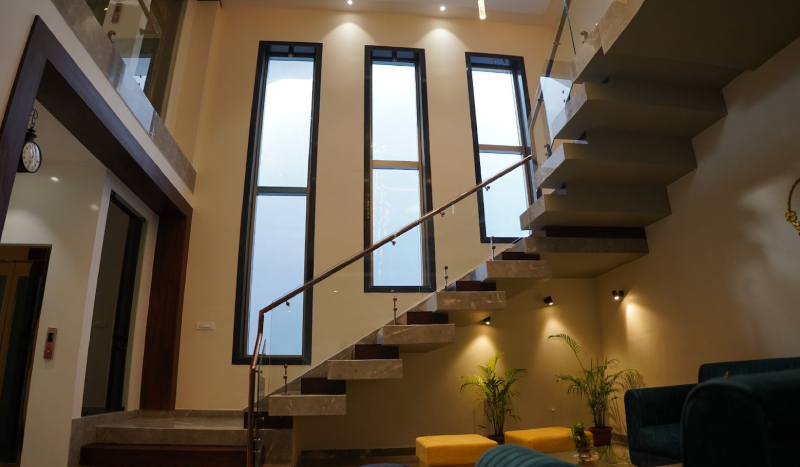
For most modern windows for home projects, powder coating is the preferred choice. Homeowners often want the window frames to blend seamlessly with the wall colour or provide a striking contrast (like black frames on white walls). The ability to choose a specific matte or satin finish allows for greater integration with the interior design.
4. Budget Considerations
If the project is budget-sensitive, powder coating generally offers a better cost-to-benefit ratio. You get a durable, beautiful finish at a lower price point than anodising. However, ensure you are not compromising on the quality of the powder used, as cheap powders will cost more in maintenance down the line.
Also Read : Comparison Between Window Materials
Conclusion
Choosing between anodised vs powder-coated aluminium comes down to your priorities. Anodising is ideal for coastal homes, high-traffic commercial spaces, or anyone who prefers a natural metallic look. Powder coating suits homeowners seeking specific colours, matte textures, or a budget-friendly finish. And for those who want long-lasting beauty without compromise, TOSTEM’s TEXGUARD finish offers exceptional durability, colour stability, and gloss retention.