Open-plan living rooms look great on paper until you’re trying to watch TV six feet from a dining table, or working from home with the kitchen in full view. This is exactly why living room partition design has become one of the most searched home-improvement topics in India this year: homeowners want the openness of a big room without giving up privacy, quiet, or a sense of structure.
A living room divider doesn’t have to mean bricks, cement, and a contractor for two weeks. From sliding aluminium and glass systems to bookshelves, curtains, and slatted wood screens, a well-chosen room partition can define zones, control light, and add real personality to your home all without touching a single load-bearing wall. This guide walks through 30+ living room divider ideas, how to pick the right one for your space and budget, and answers to the questions homeowners ask most.
In This Guide
- Why choose a partition over a permanent wall
- How to choose the right living room partition design
- 30+ living room divider ideas, by material and style
- Simple living room partition ideas for small spaces
- Aluminium & glass dividers the modern, low-maintenance choice
- French doors as living room dividers
- Material and cost comparison
- FAQs
Why Choose a Living Room Partition Over a Permanent Wall
Interior designers have a name for this middle ground between fully open-plan and fully closed rooms: broken-plan living. Instead of one giant, undifferentiated room, a partition creates a defined seating zone, a dining zone, or a home-office corner while keeping sightlines, daylight, and airflow largely intact. Unlike a masonry wall, most living room separator options are reversible: you can slide them open for a party, close them for a quiet evening, or remove them entirely if your needs change.
The practical upside is significant:
- Zoning without construction no permissions, dust, or structural changes
- Light and airflow are preserved, especially with glass, slatted wood, or open shelving
- Flexibility many partitions can be reconfigured, folded back, or moved as your layout changes
- Function-stacking a partition can double as storage, display, or a media unit, not just a divider
How to Choose the Right Living Room Partition Design
Before browsing ideas, it helps to narrow down four decisions:
- Purpose: Are you blocking a view completely (privacy), or simply suggesting a boundary (zoning)? This decides whether you need a solid or a semi-open partition.
- Light: Rooms with a single main window benefit from glass, fluted glass, or slatted designs that let daylight travel through the room.
- Space: In compact apartments, look for slim-profile, sliding, or foldable partitions over bulky fixed structures.
- Budget and maintenance: Fabric and freestanding shelving are the most affordable and easiest to change; framed aluminium and glass systems cost more upfront but need almost no upkeep and last for decades.
Must Read:- Top Modern Door and Window Design Ideas
30+ Living Room Divider Ideas
Here are the most effective living room partition ideas, grouped by material, so you can match one to your room’s light, layout, and style.
Aluminium & Glass Dividers
- Aluminium-framed fixed dividers slim, powder-coated frames with glass infill that define a zone without blocking light
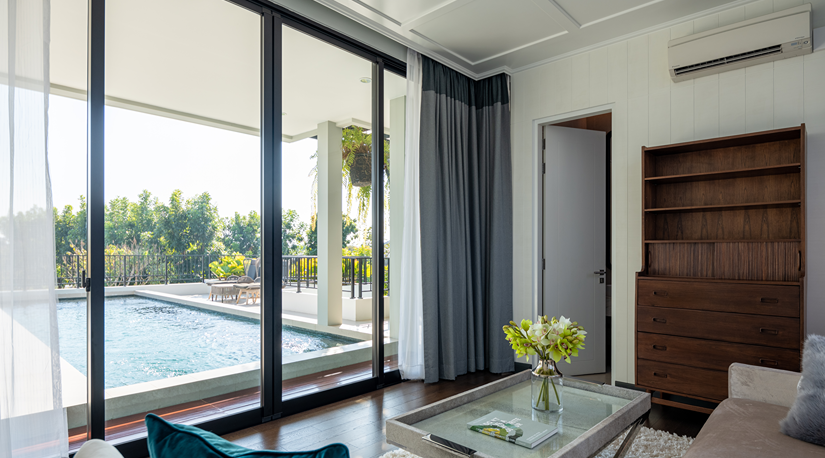
- Sliding glass partitions open the space fully when needed, close it off for a home office or study corner
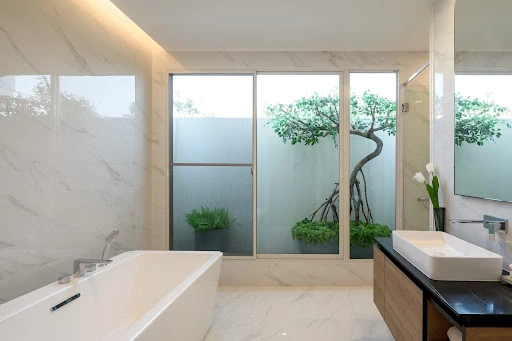
- Frosted or fluted glass panels privacy with diffused light, ideal for a TV or reading nook
- Glass and black metal grid partitions an industrial-modern look that pairs well with wood or brass accents
- Glass and steel mix a sophisticated option for contemporary, minimalist interiors
Wooden & Natural Material Dividers
- Vertical wooden slat / louvre screens filter light and views while keeping the room feeling airy
- Bamboo screens lightweight, breathable, and a strong choice for a natural or coastal aesthetic
- Solid wood panel partitions with built-in storage combine zoning with real storage capacity
- Wood and glass combination dividers warmth plus openness, ideal for open-plan homes
- Jali-style (lattice) wooden screens a classic Indian design element that adds pattern and cultural character
Soft & Flexible Dividers
- Curtain dividers the easiest, most affordable way to zone a space, and simple to swap out seasonally
- Fabric panel screens on a track a step up from curtains, with a cleaner, more tailored look
- Suspended rope, rattan, or brass partitions decorative, theatrical dividers for statement living rooms
Storage-Based Dividers
- Bookshelf partitions double as a room divider and a display piece for books, plants, and decor
- TV unit partitions separate the living and dining zones while housing your screen and media storage
- Freestanding open shelving sections a room without blocking floor space or light
- Bar unit dividers ideal for homes that entertain, separating living and dining with a functional bar counter
- Modular storage walls combine cabinets, open cubbies, and display shelves in one partition system
Structural & Architectural Dividers
- Low-height partition walls define a zone at waist height while keeping ceilings and light open
- Gypsum board dividers lightweight, easy to shape, paint, or backlight
- Faux or structural columns a subtle way to hint at a boundary between the entrance and living area
- A change in ceiling height or a false ceiling beam signals a new zone without any vertical divider at all
- Floor material change (tile-to-wood transition) a purely visual zoning cue that costs nothing structurally
Statement & Decorative Dividers
- Circular or arch-shaped dividers add fluidity and a sculptural focal point
- Contrasting colour partitions bold, maximalist colour-blocking for a design-forward living room
- Metal frame with wooden or laminate inserts an industrial-meets-warm aesthetic
- Planter or greenery walls a biophilic divider that improves air quality and adds a natural focal point
- Backlit or onyx-look partitions create ambient lighting while defining the space
Simple Living Room Partition Ideas for Small Spaces
You don’t need a large budget or a large room to zone your living area. For compact apartments and rental homes, these simple living room partition ideas work well because they’re lightweight, reversible, and don’t require any structural work:
- A single curtain track hung floor-to-ceiling to separate a sleeping nook from the living area
- A slim two-shelf bookcase placed perpendicular to the sofa
- A folding screen that tucks away completely when not in use
- A rug and furniture-arrangement “soft zone” placing the back of a sofa toward the walkway to imply a boundary without any physical divider at all
- A single fixed glass panel near the entrance to separate the foyer from the seating area
Aluminium & Glass Dividers: The Modern, Low-Maintenance Choice
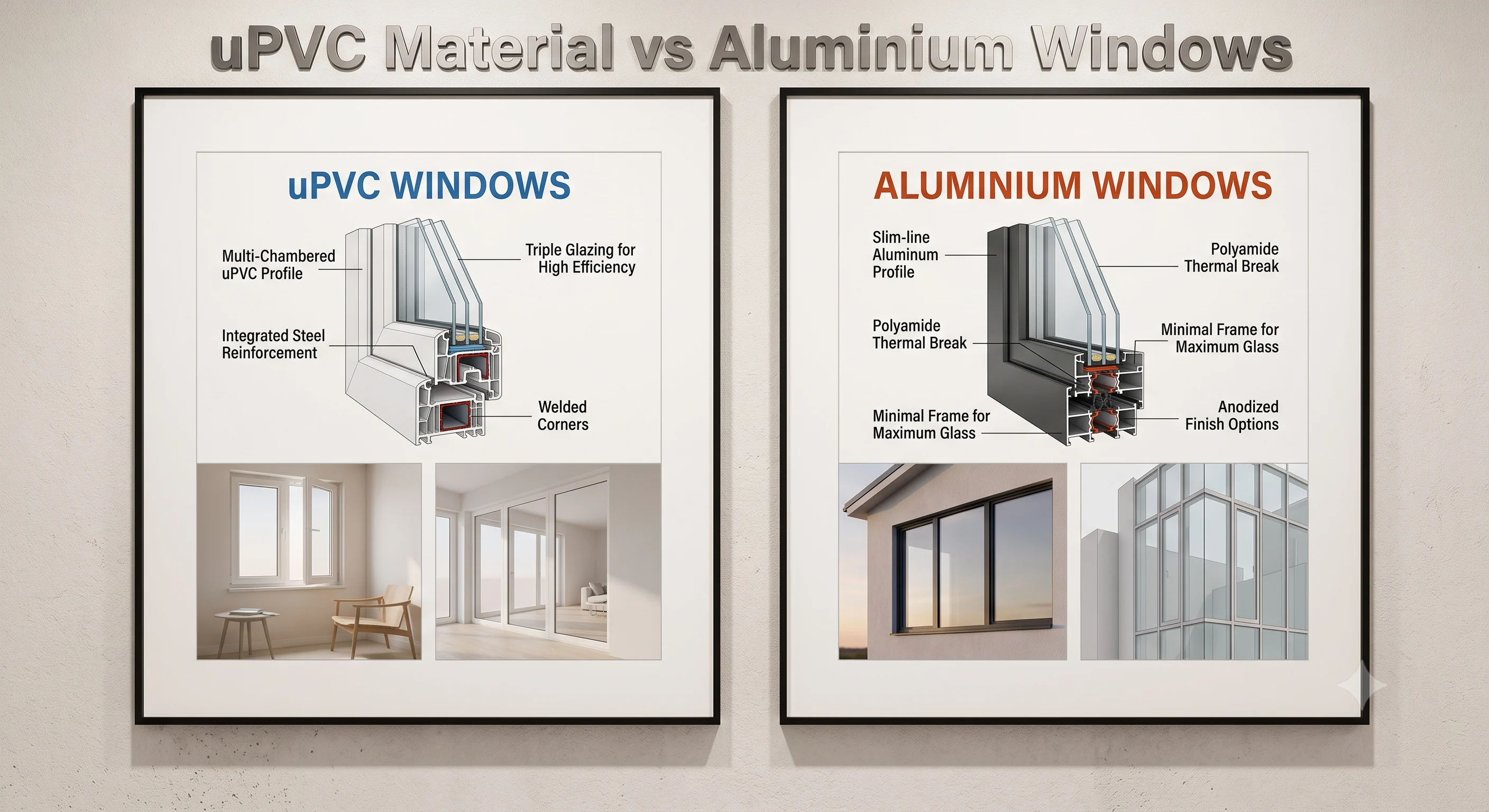
For homeowners who want a partition that looks as good in year ten as it does on day one, framed aluminium doors and fixed divider systems are worth the higher upfront investment. Aluminium doesn’t warp, swell, or need repainting the way wood can in humid Indian climates, and slim, powder-coated frames read as far more contemporary than a bulky partition wall.
TOSTEM’s IN16 interior series is a good example of what this category looks like at its best: a 16mm slim profile, concealed hardware, and flush glazing that reads as a single continuous plane rather than a bulky frame. It’s available as fixed dividers, hanging doors, and swing doors within the same design language, in five anodised finishes, so the divider can match your existing doors and windows rather than standing apart from them. For living rooms, these dividers work particularly well between a seating area and a dining space, a study corner, or a home-office nook anywhere you want a boundary that still lets light and sightlines through.
French Doors as Living Room Dividers
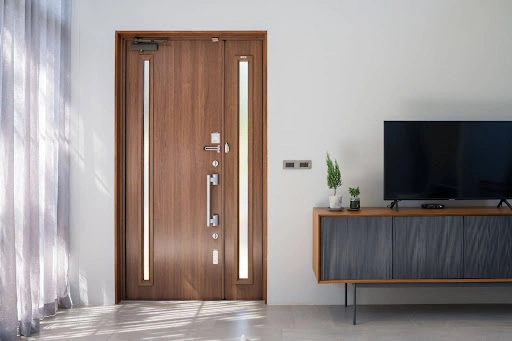
If you want a partition with a softer, more classic look than an all-glass system, a french door design is worth considering. French doors use wide glass panels framed in slim aluminium or wood, and work particularly well as an interior divider between a living room and a dining area, balcony, or study bringing in natural light while still offering a clear, closeable boundary when you want one. Because they open fully rather than sliding into a wall cavity, they’re best suited to living rooms with a little extra clearance on either side of the opening.
Material & Cost Comparison
| Material | Cost Band | Maintenance | Best For |
|---|---|---|---|
| Curtain / fabric | Low | Wash/replace periodically | Renters, frequent layout changes, budget zoning |
| Wood / bamboo | Low–Mid | Occasional refinishing | Warm, natural interiors; light-filtering slats |
| Gypsum board | Low–Mid | Low, repaint as needed | Soft visual barriers, backlit or feature-wall looks |
| Glass panels (framed) | Mid–High | Wipe clean, very low | Maximum light retention, modern interiors |
| Aluminium-framed dividers | Mid–High | Very low, corrosion-resistant | Long-term use, humid climates, slim modern profiles |
| Custom joinery / storage wall | High | Low | Combined storage + zoning, statement pieces |
Final Thoughts
A living room partition is one of the highest-impact, lowest-disruption upgrades you can make to an open-plan home. Whether you go for a soft curtain divider while you’re renting, a bookshelf that adds storage along with structure, or a premium aluminium and glass system built to last decades, the right room partition lets you have both the openness of one large room, and the definition of several purposeful ones.
FAQs
What is the best living room partition design for small apartments?
For compact homes, lightweight and reversible options work best curtains, slim bookshelves, folding screens, or a single fixed glass panel. These define a zone without consuming floor space or blocking light.
Which material is best for a living room divider?
It depends on your priority. Glass and aluminium-framed dividers are best for maximising natural light with minimal upkeep. Wood and bamboo suit a warmer, natural aesthetic. Fabric and curtains are the most affordable and flexible, ideal if you expect to change your layout often.
Do room partitions block natural light?
Not if chosen well. Glass panels, slatted wood screens, fluted glass, and open shelving all allow light to pass through or filter across the room, so the space still feels open even with a clear zoning boundary in place.
Can a partition be used to divide a living room and dining area?
Yes this is one of the most common uses. TV unit partitions, bar unit dividers, low-height partition walls, and framed glass or aluminium dividers all work well between living and dining zones, since they define the space without fully closing it off.
Are aluminium partition doors better than wooden ones?
Aluminium partitions generally outperform wood on durability and maintenance; they resist warping, corrosion, and humidity damage, and need little more than an occasional wipe-down. Wood offers a warmer look and lower upfront cost, but may need periodic refinishing, especially in humid climates.
How much does a living room partition cost in India?
Costs vary widely by material and size: fabric or curtain dividers are the most budget-friendly, gypsum and wood partitions sit in the mid-range, and framed glass or aluminium systems are a higher upfront investment that pays off in durability and low maintenance over time.