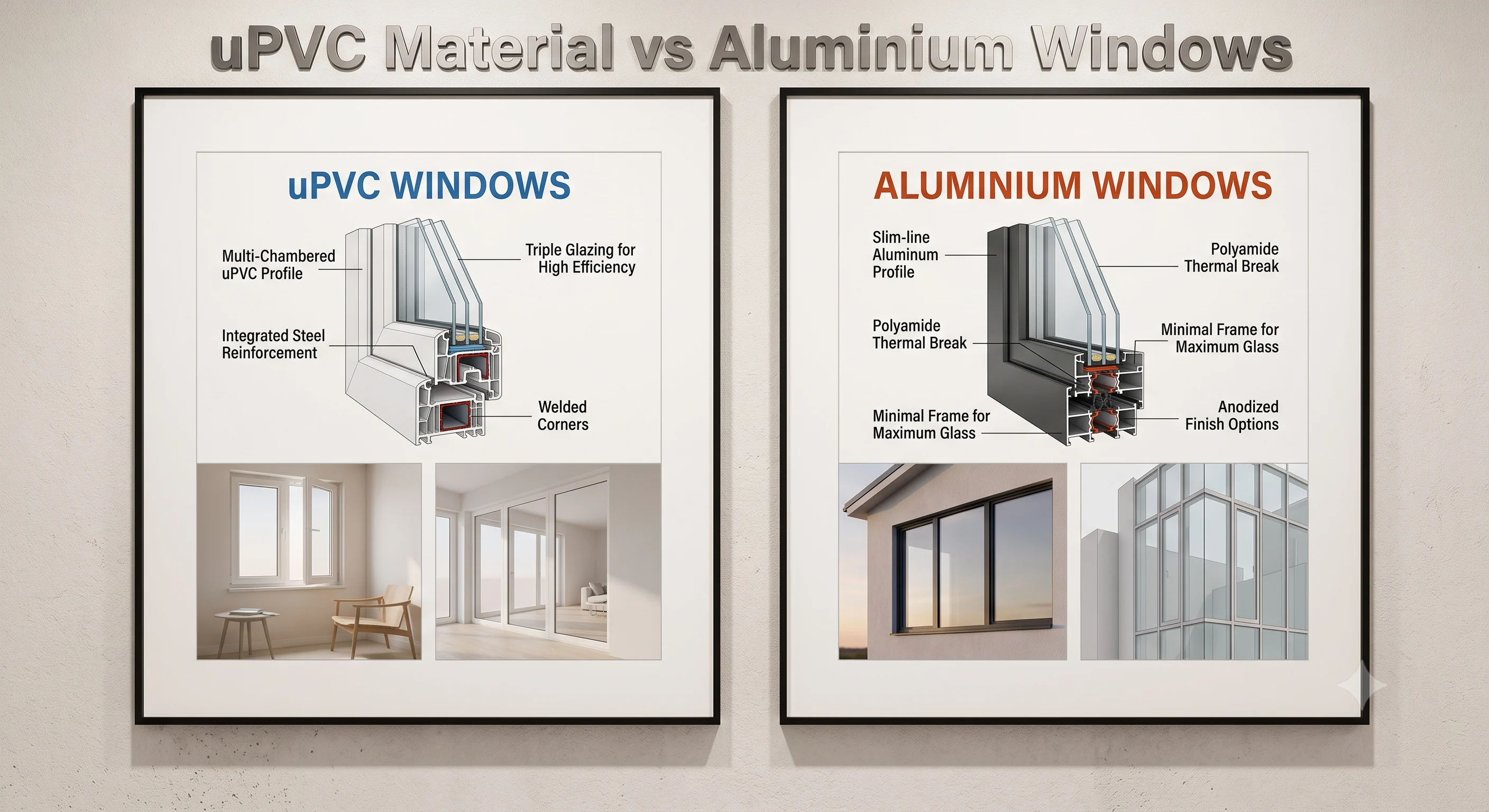
Choosing the right window material is one of the most important decisions when building or renovating a home. It affects everything from energy efficiency and maintenance to aesthetics and long-term durability. Among the most popular choices, uPVC material and aluminium windows offer distinct advantages depending on your home’s design, climate and lifestyle needs. Understanding how each material performs helps you make an informed decision that balances functionality, comfort and visual appeal.
Understanding Window Materials
Both uPVC and aluminium are widely used for modern window systems, but they differ in their composition, performance and applications. Knowing their individual characteristics makes it easier to identify which option best suits your home.
What is uPVC Material?
uPVC (Unplasticised Polyvinyl Chloride) is a rigid plastic material commonly used for manufacturing doors and windows. Unlike standard PVC, it contains no plasticisers, making it stronger, more durable, and more resistant to moisture, corrosion, and weathering.
Key characteristics of uPVC include:
- Excellent thermal insulation.
- High resistance to moisture and corrosion.
- Low maintenance with no painting required.
- Good acoustic insulation.
- Suitable for a wide range of residential applications.
Why is Aluminium a Popular Window Material?
Aluminium has become a preferred choice for contemporary homes because of its strength, durability and slim profiles. It supports larger glass panels while maintaining structural stability, making it ideal for modern architectural designs.
Key advantages include:
- Slim sightlines for larger glazing.
- Strong yet lightweight construction.
- Excellent durability.
- Contemporary appearance.
- Suitable for large openings and panoramic views.
- Taller window configurations than uPVC, allowing for larger openings.
Aluminium has become a preferred choice for contemporary homes because of its strength, durability and slim profiles. It supports larger glass panels while maintaining structural stability, making it ideal for modern architectural designs. These qualities also make aluminium an excellent choice for a window slider design and expansive glass sliding window systems in modern homes.
uPVC vs Aluminium Windows
Both materials perform well, but each offers distinct strengths depending on your project’s priorities.
| Feature | uPVC | Aluminium |
| Thermal insulation | Excellent | Moderate |
| Noise reduction | Excellent | Good |
| Maintenance | Very Low | Low |
| Weather resistance | Excellent | Excellent |
| Design flexibility | Good | Excellent |
| Large glass openings | Limited | Excellent |
| Durability | Excellent | Excellent |
| Sustainability | Recyclable | Highly recyclable |
While both materials deliver long-term performance, the right choice depends on how you prioritise insulation, aesthetics, durability and maintenance.
Key Differences That Influence Your Decision
Every home has unique design requirements. Looking beyond the basic comparison helps you understand how each material performs in everyday conditions.
Thermal Performance
uPVC naturally provides better thermal insulation because it has lower thermal conductivity than aluminium. This helps reduce heat transfer and can improve indoor comfort in regions with high summer temperatures. Aluminium window systems often rely on advanced glazing and frame technology to enhance thermal performance.
Durability and Weather Resistance
Both materials are designed to withstand outdoor conditions, but their performance depends on quality and manufacturing standards. uPVC resists corrosion and moisture, while aluminium offers excellent structural strength and performs well across different climates when finished with high-quality protective coatings.
Maintenance Requirements
Both options require relatively little maintenance compared to traditional timber windows. uPVC needs higher maintenance , while anodised aluminium frames are also easy to maintain and retain their appearance for years.
Design and Aesthetics
This is where aluminium offers a distinct advantage. Slim frames allow larger glass panels, creating brighter interiors and uninterrupted outdoor views. Premium aluminium window systems from TOSTEM combine Japanese precision engineering with sleek profiles, making them well-suited for contemporary homes that prioritise natural light and minimalist architecture for upto 40 years.
Evaluating these factors together helps homeowners select a window material that complements both their lifestyle and architectural vision.
Must Read:- A Comprehensive Guide to UPVC Windows vs Aluminium Windows
Which Window Material Should You Choose?
There is no single answer for every project. The right choice depends on your home’s location, design goals and performance expectations.
| If you want | Recommended Material |
| Better thermal insulation | uPVC |
| Large glass openings | Aluminium |
| Contemporary architecture | Aluminium |
| Minimal maintenance | Both |
| Slim window profiles | Aluminium |
| Energy-efficient homes | Depends on glazing and frame specification |
Considering both immediate needs and long-term performance helps ensure your investment delivers lasting value.
Why Aluminium Windows Continue to Be a Popular Choice
Aluminium windows have become increasingly popular because they combine modern aesthetics with reliable performance. Their structural strength allows architects to design expansive openings without compromising stability, making them suitable for villas, apartments and premium residences.
Their versatility also allows homeowners to incorporate a stylish window slider design or a premium glass sliding window into contemporary living spaces, creating wider openings, smoother operation and better indoor-outdoor connectivity.
- Slim profiles maximise natural light.
- Support larger glass panels.
- Strong, lightweight construction.
- Excellent weather resistance.
- Low maintenance.
- Long service life.
Designed with Japanese precision engineering, TOSTEM aluminium windows deliver clean aesthetics, durable performance and reliable weather protection. Their slim frames create bright, open interiors while complementing contemporary architectural styles.
Conclusion
Both uPVC and aluminium windows offer valuable benefits, making the right choice dependent on your home’s design, climate and performance priorities. While uPVC excels in thermal insulation, aluminium stands out for its slim profiles, structural strength and contemporary aesthetics. By carefully evaluating your requirements, you can select a window system that delivers lasting comfort and functionality. For homeowners seeking premium aluminium solutions, TOSTEM offers precision-engineered aluminium window systems that combine elegant design with dependable long-term performance.
FAQs
What is uPVC material?
uPVC (Unplasticised Polyvinyl Chloride) is a rigid plastic material used to manufacture doors and windows. It offers excellent weather resistance, thermal insulation and low maintenance, making it a popular choice for residential applications.
Which window material lasts longer?
Both high-quality uPVC and aluminium windows offer long service lives when properly installed and maintained. The overall lifespan depends on manufacturing quality, installation, and exposure to local weather conditions. Some premium aluminium systems also incorporate advanced surface protection technologies. For example, TOSTEM’s patented TEXGUARD coating is engineered to retain its lustre and finish for up to 40 years, helping maintain the appearance of aluminium windows with minimal maintenance.
Are aluminium windows suitable for coastal areas?
Yes. Premium aluminium windows with high-quality protective finishes perform well in coastal environments by resisting corrosion and weather-related wear.
Which window material requires less maintenance?
Both materials are generally considered low maintenance. However, aluminium window systems often offer greater long-term durability with minimal upkeep. Regular cleaning is typically sufficient to maintain their appearance, and premium aluminium systems with advanced surface protection can retain their finish and performance for decades, even when exposed to varying weather conditions.