
Choosing the right door can significantly affect a home’s style, functionality, and comfort. Homeowners often face the dilemma of sliding doors vs. French doors, especially when upgrading living spaces or improving indoor–outdoor connections. While both options enhance natural light and accessibility, they differ in design, space requirements, and performance. A wrong choice can lead to wasted space, poor ventilation, or maintenance challenges. Understanding the benefits and limitations of each type helps homeowners make informed decisions that suit their lifestyle, aesthetics, and long-term needs.
What Is a French Door and How Does It Work?
A French door system typically consists of two hinged panels with large glass sections spanning most of the surface. The panels open inward or outward, depending on site conditions. Historically associated with classical European architecture, French door design is recognised for its symmetry, proportion, and refined detailing.
Because both panels can open fully, French doors allow uninterrupted airflow and a wide physical opening. This makes them particularly effective in spaces where ventilation is a priority. When open, they create a strong visual and physical connection between indoor and outdoor areas.
However, a hinged operation requires adequate clearance. Furniture placement and circulation near the doorway must be carefully planned to avoid obstruction. In residential balconies, French balcony doors are often chosen to create a refined architectural opening that enhances façade character while allowing daylight and airflow into interior spaces.
What is a Sliding Glass Door and How Does It Work?
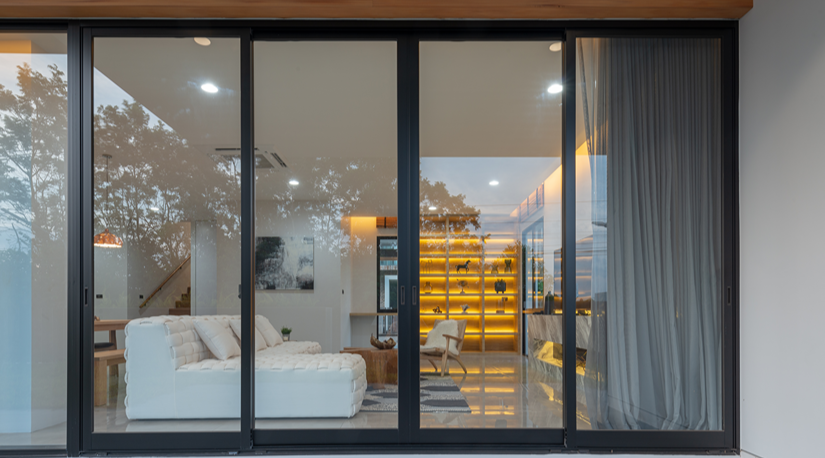
Sliding glass doors operate on a horizontal track system, where one or more panels glide along aluminium tracks while adjacent panels remain fixed. This mechanism eliminates the need for swing space, making sliding systems efficient in homes with limited floor area.
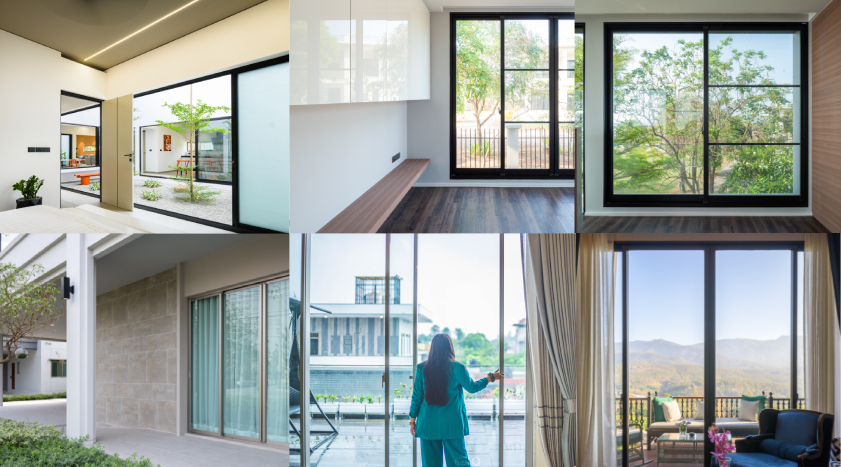
In comparisons between sliding and French door configurations, sliding doors are often favoured in apartments and contemporary homes due to their space-saving operation. Large, uninterrupted glass panels provide expansive views, while slim sightlines enhance a minimalist aesthetic. While sliding doors admit generous daylight, ventilation is limited to the portion of the opening that slides, as one panel always overlaps the other.
Comparison Between: French Vs Sliding Glass Doors
Here is the Comparison Between French Vs Sliding Glass Doors
| Feature | French Doors | Sliding Glass Doors |
| Design | Hinged, traditional | Sliding, modern |
| Space Requirements | Needs swing space | Space-saving |
| Ventilation | Fully openable | Partially openable |
| Aesthetic Style | Elegant, classic | Minimalist, contemporary |
| Cost | Higher | Lower |
| Maintenance | Hinges upkeep | Track cleaning |
| Energy Efficiency | Depends on materials | Depends on materials |
How Space and Layout Influence the Choice?
Space and layout play a defining role in how an architectural element is perceived and how effectively it functions within an interior.
- Swing clearance requirements: French doors require space to swing inward or outward, which can restrict furniture placement and circulation in compact rooms.
- Space efficiency in compact layouts: Sliding doors operate within their frames and do not encroach on usable floor space, making them well-suited to smaller living rooms, bedrooms, or areas opening onto balconies and terraces.
- Furniture placement flexibility: Because sliding doors do not require clearance for movement, furniture can be positioned closer to the opening without affecting functionality or access.
- Suitability for larger homes: Homes with larger rooms, villas, or independent houses can comfortably accommodate the swing radius of French doors, allowing them to function as strong architectural features.
- Urban apartment considerations: High-rise apartments and compact homes typically benefit more from sliding systems due to their space efficiency and layout flexibility.
Ventilation and View Performance
French doors provide maximum ventilation because the entire opening can be cleared, supporting strong cross-ventilation and rapid air exchange. Sliding doors allow partial ventilation, which is often sufficient in urban homes but less effective for full airflow.
In terms of views, sliding doors generally perform better. Wider glass panels and minimal framing create uninterrupted sightlines to outdoor spaces. French doors may include grids or bars that subtly interrupt views while reinforcing their traditional character.
Aesthetic Direction and Architectural Fit
Architectural style strongly influences the choice. French doors complement classical, transitional, and European-inspired homes where symmetry and detailing are important. Sliding doors align with contemporary architecture, where clean lines, openness, and visual continuity are prioritised.
Performance Beyond Appearance
Door performance extends beyond visual preference. Wind resistance, air tightness, water tightness, and acoustic insulation are essential for long-term comfort. Well-engineered aluminium systems support thicker glazing, advanced sealing, and multi-point locking, improving durability, security, and indoor comfort.
Role of Engineered Aluminium Systems
In premium residential projects, consistency and testing standards are critical. TOSTEM offers pre-engineered aluminium door systems developed with Japanese manufacturing precision. These systems are factory-fabricated to ensure uniform quality and are tested for wind load, air infiltration, water resistance, and sound insulation.
Delivered through a controlled installation format and protected by TEXGUARD surface technology, aluminium doors maintain structural performance and finish stability across diverse climatic conditions.
Cost and Maintenance Considerations
Sliding doors are generally more cost-effective due to simpler hardware and installation. French doors involve additional components such as hinges, reinforced frames, and multiple locking points, which can increase overall cost.
Maintenance requirements differ rather than increase. Sliding doors require regular track cleaning to ensure smooth operation, while French doors may require periodic hinge alignment. Both systems perform reliably when maintained correctly.
How to Decide What Works Best for Your Home?
The right door choice depends less on trends and more on how your home functions on a daily basis, from space usage to comfort and long-term usability.
- Evaluate available floor space: Consider how much clearance you can realistically allow near the opening. Door movement should not interfere with circulation paths or furniture placement.
- Assess ventilation needs: Homes that rely heavily on natural airflow may benefit from wider openings, while spaces with mechanical ventilation can function well with controlled air movement.
- Think about daily usage patterns: Frequently used openings, such as those leading to balconies or gardens, should be easy to operate and comfortable for everyday movement.
- Consider visual priorities: Decide whether uninterrupted outdoor views or framed architectural detailing is more important for the space and its function.
- Align with architectural style: Door selection should reinforce the home’s overall design language rather than compete with it, ensuring visual consistency across interiors.
- Plan for long-term maintenance: Choose a system that aligns with your maintenance requirements, whether that involves periodic hardware checks or routine cleaning.
- Account for future flexibility: A well-chosen door system should adapt to changing furniture layouts, lifestyle needs, and long-term use without limiting options.
Making a decision based on these practical factors ensures the chosen door system enhances both comfort and functionality over time.
Conclusion
French doors offer elegance, full ventilation, and architectural presence, while sliding doors deliver space efficiency, expansive views, and modern appeal. By evaluating layout constraints, ventilation needs, architectural style, and performance expectations, homeowners can confidently select a door system that enhances comfort, usability, and long-term value. With high-quality aluminium engineering, both options perform reliably when matched correctly to the space.
FAQs
What is the difference between French doors and sliding glass doors?
French doors use hinged panels that swing open inward or outward, while sliding glass doors operate horizontally on a track system. French doors offer a classic and elegant appearance with full opening access, whereas sliding doors provide space-saving functionality and a more contemporary aesthetic.
Which is better: French doors or sliding doors?
The better option depends on your space, ventilation needs, and design preferences. French doors are ideal for traditional homes and maximum airflow, while sliding doors are better for compact spaces, modern interiors, and uninterrupted outdoor views.
Are sliding glass doors more space-saving than French doors?
Yes, sliding glass doors are more space-saving because they move along a track and do not require swing clearance. This makes them ideal for apartments, balconies, and smaller rooms where optimising usable floor space is important.
Do French doors provide better ventilation than sliding doors?
Yes, French doors generally provide better ventilation because both panels can open completely, allowing maximum airflow and cross-ventilation. Sliding doors only allow ventilation through the portion that slides open.
Which door is best for small homes and apartments?
Sliding glass doors are usually the best option for small homes and apartments because they save space, allow flexible furniture placement, and create a clean, modern appearance without requiring additional opening clearance.
Are sliding glass doors good for modern homes?
Yes, sliding glass doors are highly suitable for modern homes due to their sleek design, slim sightlines, and ability to create seamless indoor-outdoor connectivity. Their minimalist appearance complements contemporary architectural styles.
What are the advantages of French doors?
French doors offer elegant aesthetics, wider ventilation openings, and strong architectural character. They also create a refined connection between indoor and outdoor spaces while allowing more natural airflow and accessibility when fully opened.
Which door offers better outdoor views?
Sliding glass doors generally offer better outdoor views because they feature larger uninterrupted glass panels and minimal framing. This creates wider sightlines and allows more natural light into the interior space.
Which is more energy-efficient: French doors or sliding doors?
Both French and sliding doors can be energy-efficient when designed with high-quality aluminium systems, advanced sealing, and insulated glazing. Proper installation and weather-resistant engineering play a major role in improving thermal and acoustic performance.
How do I choose between French doors and sliding doors?
Choosing between French doors and sliding doors depends on available space, ventilation requirements, architectural style, and daily usage needs. French doors work best in spacious homes with traditional aesthetics, while sliding doors are ideal for modern, compact, and space-efficient interiors.